Disclosure: this article contains affiliate links. If you buy through them, AliCoinsDeals may earn a commission at no extra cost to you.
Some AliExpress makeup is safe, but you can’t assume it, and 2026 gave the clearest evidence yet. When EU customs checked close to 6,000 cosmetics bought online, 65% failed EU product rules. In July 2026 the European Commission fined AliExpress €550 million, naming “dangerous cosmetics” among the products it failed to control.
That doesn’t make every lipstick on the platform dangerous. It means the burden of checking sits with you, and the label tells you most of what you need. This guide covers what regulators found, which products carry the real risk, and the 60-second label check that filters out most of it.
Key Takeaways
- EU customs checked close to 6,000 cosmetics bought online in late 2025. 65% didn’t comply with EU rules, and 63% of those were of Chinese origin.
- The Commission fined AliExpress €550 million in July 2026 for failing to assess the risk of unsafe and counterfeit products, cosmetics included.
- Cosmetics are the most reported product category on the EU’s Safety Gate alert system, for the third year running.
- A legal EU cosmetic must show a responsible person’s address, a batch number and an ingredient list. Missing any of them is a red flag.
- Tools like brushes and sponges are low risk. Skin-lightening creams and branded makeup far below retail are the ones to avoid.
What Did EU Regulators Find in Cosmetics Bought Online?
The largest test so far came from EU customs. In controls run from October to December 2025, EU authorities checked close to 6,000 cosmetics bought online, including skincare, make-up, hair and nail products. “65% of those products did not comply with EU product standards.”
The origin data matters for AliExpress buyers. “The largest share (63 %) of these non-compliant cosmetics products was of Chinese origin.” The failures ranged from missing labels and documentation to forbidden ingredients.
The EU’s product alert system tells the same story. The Safety Gate 2025 report recorded 4,671 alerts on dangerous products. Cosmetics were “the most frequently notified product category on Safety Gate for the third year”, at around a third of all alerts.
Neither source names a platform. They describe cosmetics bought online in general, and AliExpress is one of the largest channels for them.
Why Was AliExpress Fined €550 Million?
On 20 July 2026 the European Commission fined AliExpress €550 million under the Digital Services Act. The finding was that AliExpress fell short of its duty to “diligently assess the risk of dissemination of illegal, unsafe, or counterfeit products through its services”.
The Commission named the products it had in mind: “counterfeit clothing, unsafe toys, dangerous cosmetics and other illegal and harmful products”. It called their spread “a failure by AliExpress to comply with its obligations”, not an unavoidable cost of shopping online.
For a buyer, the fine is not a verdict on any single listing. It is an official finding that AliExpress was not doing enough filtering on its side. Until that changes, the checks in this guide are the filter. The broader picture for the platform is in is AliExpress safe and legit.
What Has Been Found in Counterfeit Cosmetics?
Counterfeits of real brands are where the worst findings come from. In February 2025, US Customs in Pennsylvania seized 50 boxes of counterfeit Estee Lauder anti-aging cream shipped from China. CBP’s release warns that “some counterfeit cosmetics contain chemicals known to cause cancer, acne, eczema, and other health issues”, and that urine has been found in fakes.
Lab tests of seized fakes have measured it. In tests reported by CBS News in 2017, a fake eyeshadow had nearly four times the lead of the genuine product, and a fake lipstick nearly 15 times.
A 2018 Los Angeles police raid on counterfeit makeup sellers found “a high level of bacterias and animal feces” after customers reported rashes. Those were street vendors, not a marketplace, but the products were the same kind of fake that marketplace listings offer.
How Do You Check a Makeup Label Before Buying?
Use the legal minimum as your test. Under the EU Cosmetics Regulation, a cosmetic can only be sold if a “responsible person” in the EU takes legal responsibility for it. Article 19 then requires the label to show that person’s name and address, a batch number, and an ingredient list. The UK kept the same rules.
Before you buy, check the listing photos and the box for four things:
- A responsible person’s name and EU or UK address. A bare factory address in China is not one.
- A batch or lot code, printed on the product itself.
- A full ingredient list, starting with the word “Ingredients”.
- A durability date or the open-jar symbol, showing how many months it lasts after opening.
A product missing several of these does not meet the legal minimum to be sold in the EU, whatever its price. If the listing photos never show the back of the box, ask the seller for one before you order.
Which Ingredients Should Make You Stop?
Two names cover most of the documented risk. The first is mercury, in skin-lightening creams. The FDA states that mercury “is a highly toxic metal” that can damage the nervous system, kidneys and skin, and that “the use of mercury in skin lightening products is banned”.
The FDA also lists the words that give it away. Its consumer guidance on mercury says that if “mercurous chloride”, “calomel”, “mercuric”, “mercurio” or “mercury” is on the label, mercury is in it. If you see any of them, don’t buy.
The second is a fragrance ingredient. The Safety Gate report found that 77% of EU cosmetics alerts for a chemical risk were caused by BMHCA, also called “Lilial”. On an ingredient list it appears as butylphenyl methylpropional. The report notes it “is prohibited since March 2022”, so finding it on a product sold to the EU means the formula breaks current rules.
Does Cheap Makeup Expire?
It can, and nothing on the box has to tell you. The FDA confirms that “there are no U.S. laws or regulations that require cosmetics to have specific shelf lives or have expiration dates”. EU rules require a date or an open-jar period instead, which is one more reason the label check above matters.
Eye products are the main concern. The same FDA page says manufacturers “usually recommend discarding mascara two to four months after purchase”, because each use exposes it to bacteria and fungi. It also warns against storing cosmetics somewhere hot, like a car, since heat can break down preservatives.
Long international shipping adds to that risk, so be strictest with anything for your eyes. And never thin a dried product. The FDA’s advice is blunt: “Do not add water or, even worse, saliva to moisten it, because that will introduce bacteria into the product.”
What Should You Buy, and What Should You Avoid?
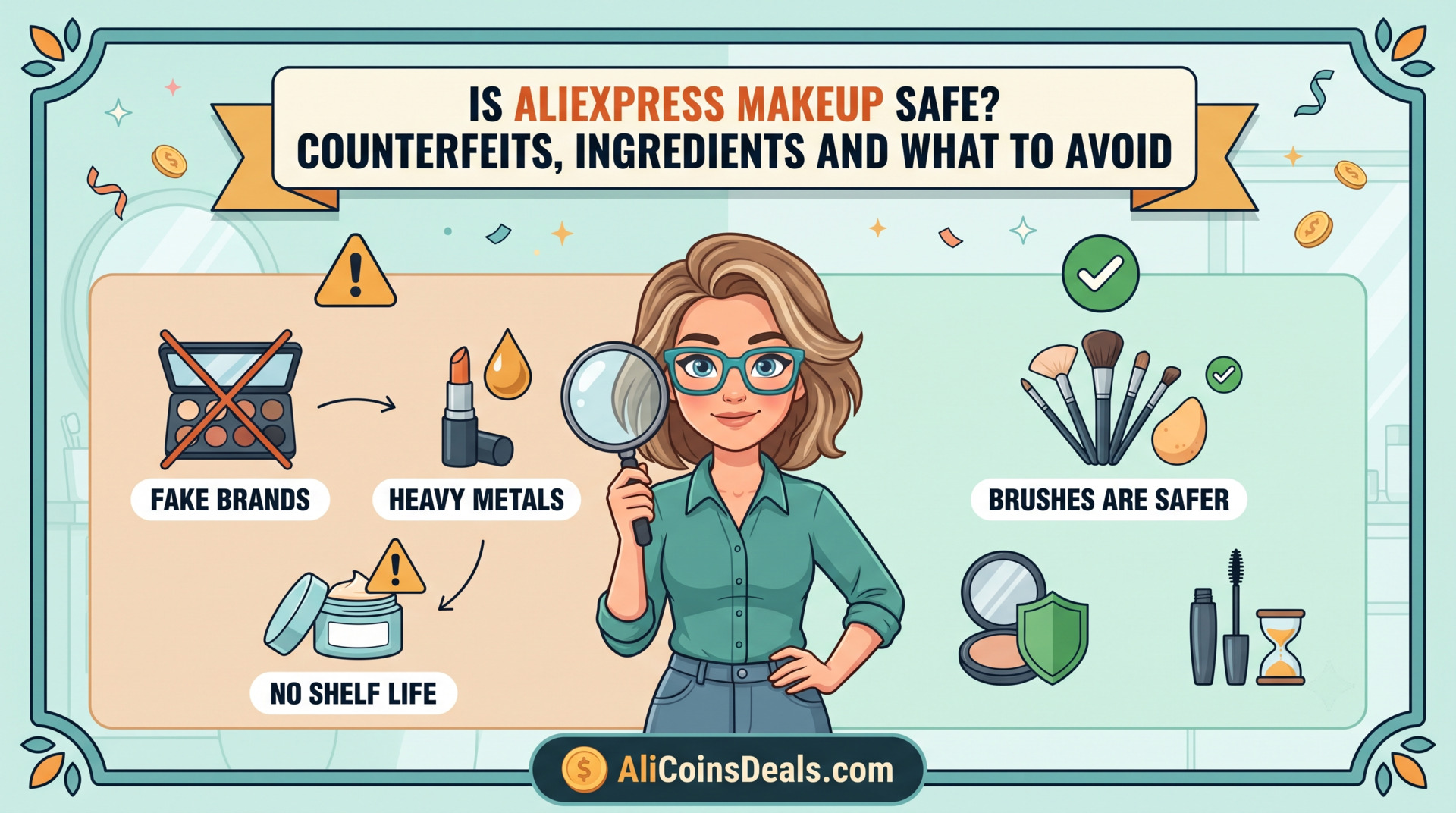
Match your caution to where the product goes. A brush that sheds is a bad purchase. A contaminated eyeliner is a health problem. The regulator findings above sit almost entirely in the second group, in products applied to skin, lips and eyes, and the worst of them in counterfeits of real brands. That gives you a clean split by category, from the items you can buy freely to the two you should skip entirely.
| Category | Risk | Why |
|---|---|---|
| Brushes, sponges, mirrors, organizers | Low | Worst case is poor durability, not contamination |
| Unbranded skin, lip and eye products | Check | Pass only if the label check above holds up |
| Branded makeup far below retail | Avoid | The profile of a counterfeit, where the worst finds are |
| Skin-lightening or whitening creams | Avoid | The documented mercury risk |
If you want a specific brand, buy it from the brand or an authorized retailer. If a “branded” item arrives clearly fake, open a not-as-described claim under Buyer Protection, and vet the next seller with our 60-second seller check first.
Frequently Asked Questions
Is it safe to buy makeup on AliExpress?
Tools and accessories, yes. Applied makeup needs checking first. EU customs found 65% of cosmetics bought online broke EU rules, and AliExpress was fined in July 2026 partly over dangerous cosmetics. Buy only products whose label shows a responsible person’s address, a batch code and full ingredients.
Can fake makeup actually be dangerous?
Yes. US Customs warns that counterfeit cosmetics can contain chemicals linked to cancer, and lab tests of seized fakes have found many times the lead of the genuine product. A 2018 Los Angeles raid found bacteria and animal feces in counterfeit makeup. Branded products sold far below retail carry the most risk.
Why was AliExpress fined by the EU?
In July 2026 the European Commission fined AliExpress €550 million under the Digital Services Act. It found AliExpress failed to properly assess the risk of illegal, unsafe and counterfeit products on its platform, naming dangerous cosmetics, unsafe toys and counterfeit clothing among them.
What should a legal cosmetic label show?
Under the EU Cosmetics Regulation, the name and address of an EU-based responsible person, a batch number, a full ingredient list, and a durability date or open-jar period. The UK applies the same rules. A product missing several of these doesn’t meet the legal minimum for sale in the EU.
How can I check for mercury in skin creams?
Read the ingredients. The FDA says that if “mercurous chloride”, “calomel”, “mercuric”, “mercurio” or “mercury” appears, the product contains mercury, which is banned in skin-lightening products. Avoid whitening creams with no full ingredient list at all, since you can’t rule mercury out.
Cosmetics share that risk profile with jewellery, where lead and cadmium turn up in unmarked alloys, and with mains chargers, where a counterfeit is a fire risk rather than a poor purchase.
The rule for makeup is simple. Buy tools freely, read the back of the box before buying anything you’ll put on your face, and walk away from branded bargains and whitening creams. If the label can’t show who is responsible for the product, nobody is.
Ready to unlock massive savings?
Don't pay full price on AliExpress. Use our free coin converter to find hidden discounts up to 90% off.